

Poly-Tab Murals: A Quick Guide
If you've been researching mural options for your space, you may have come across the term "poly-tab" and wondered what it actually means. Poly-tab is a proven technique used by muralists to paint large-scale artwork off-site, then install it directly onto a wall, offering the same look and durability as a hand-painted mural with a smoother, more efficient process. Here's everything you need to know.
What is poly-tab?
Poly-tab (also called parachute cloth or mural cloth) is a lightweight, 100% polyester fabric used by muralists to paint large-scale artwork off-site, then install it directly onto a wall. It has been used in public art for decades and is trusted by conservators, muralists, and public art programs across the country.
How does the process work?
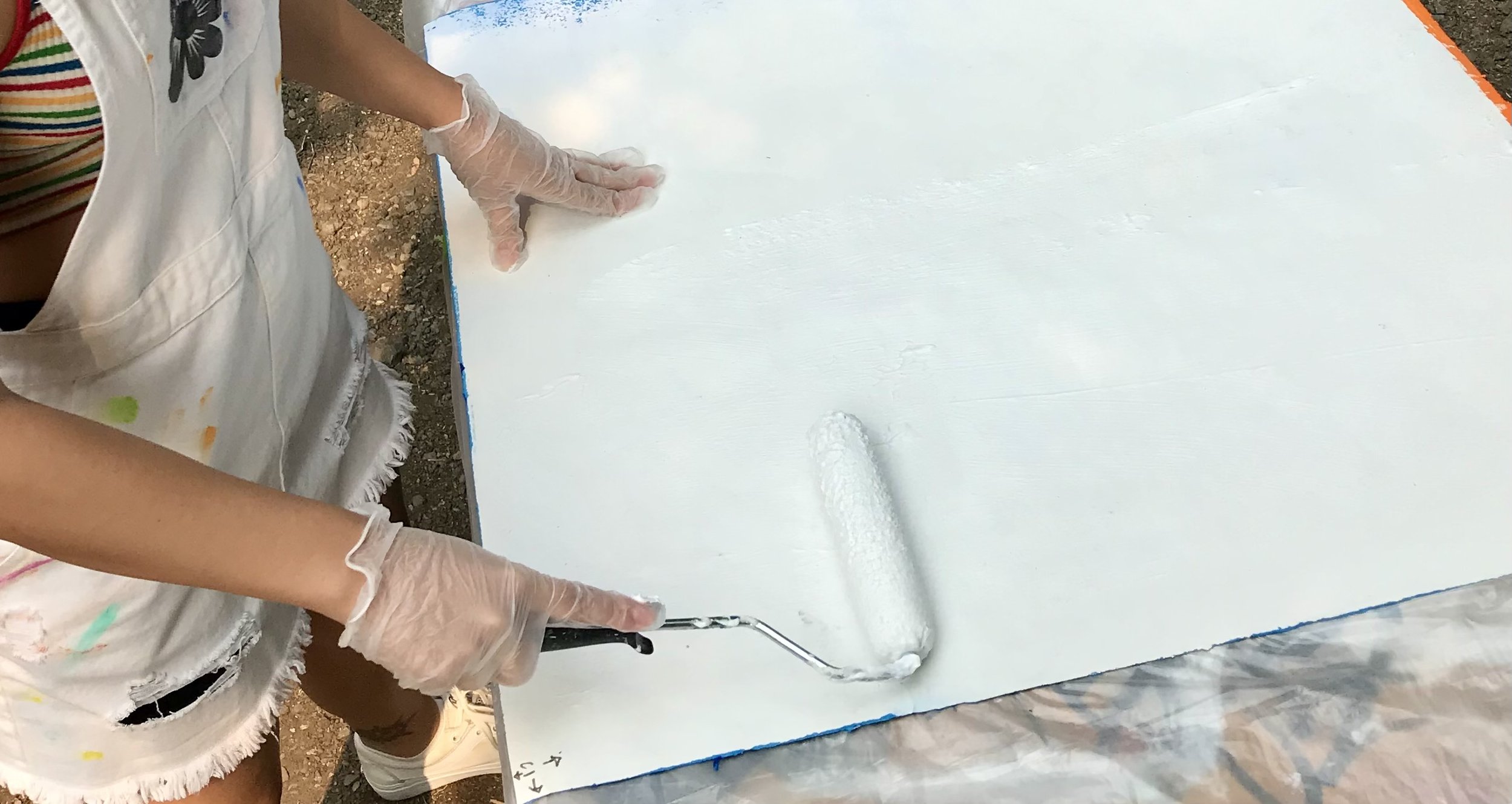
The artist primes and paints the mural on the poly-tab fabric in the studio, working at their own pace under controlled conditions.
Once complete, the painted fabric is transported to the site.
The fabric is adhered directly to the wall using an acrylic gel adhesive, similar to how wallpaper is installed. It bonds permanently to the surface.
Any final touch-ups or seam blending happen on-site after installation.
Does it look different from a hand-painted wall mural?
No. Once installed, a poly-tab mural is visually indistinguishable from a mural painted directly on the wall. The fabric takes on the texture of the surface beneath it, and the paint application, color, and detail are identical to on-site painting.
Is it as durable as paint applied directly to the wall?
Yes. Once adhered, poly-tab becomes a permanent part of the wall surface. It holds up to weather, UV exposure, and general wear the same way a directly painted mural does, especially when paired with a protective clear coat.
Why would an artist choose this method over painting on-site?
A few reasons:
Weather protection. Studio painting isn't subject to wind, rain, or extreme heat, which can delay an on-site project or affect paint application.
Efficiency. Because the artist works in a controlled studio environment, painting can move at a steady, consistent pace without the setup and breakdown time required for scaffolding or lifts each day.
Less on-site disruption. Installation typically takes a fraction of the time that full on-site painting would, meaning less time with equipment, crew, and materials at your location.
Quality control. Working in the studio allows for better lighting, easier color mixing, and more precise detail work throughout the painting process.
Does poly-tab cost more or less than painting directly on the wall?
It can go either way depending on the project, but it often comes in more cost-effective overall. While there is an added cost for the poly-tab material, this is typically offset by reduced on-site labor days, equipment rental time, and travel and lodging costs for the crew.
Will the installation require the same equipment as on-site painting (lifts, scaffolding, etc.)?
Some equipment is still needed for installation, since the mural still has to be applied at height. However, the equipment is typically needed for a much shorter window of time compared to a full on-site painting timeline.
What happens if there's damage to the mural down the road?
Poly-tab murals can be patched or touched up similarly to a traditionally painted wall. Because the material is applied in a single, adhered layer, repairs are generally straightforward.
Is there anything the client needs to do to prepare the wall?
Yes. The wall surface should be clean, structurally sound, and ready for adhesion prior to installation. Surface priming and any protective clear coat application are typically handled separately and are not included in the mural painting process itself.
Questions? Feel free to reach out. Happy to walk through any part of this process in more detail.
